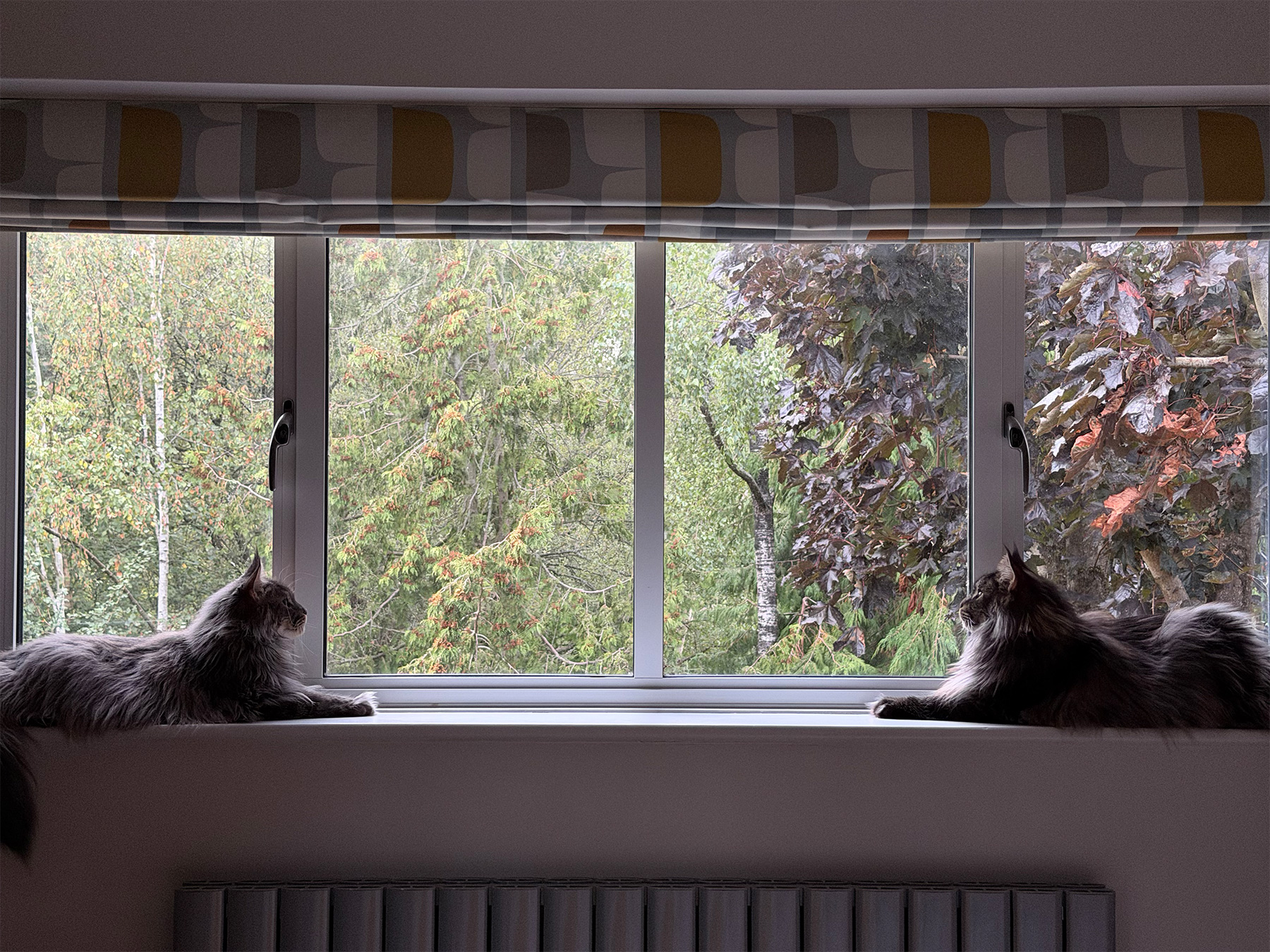
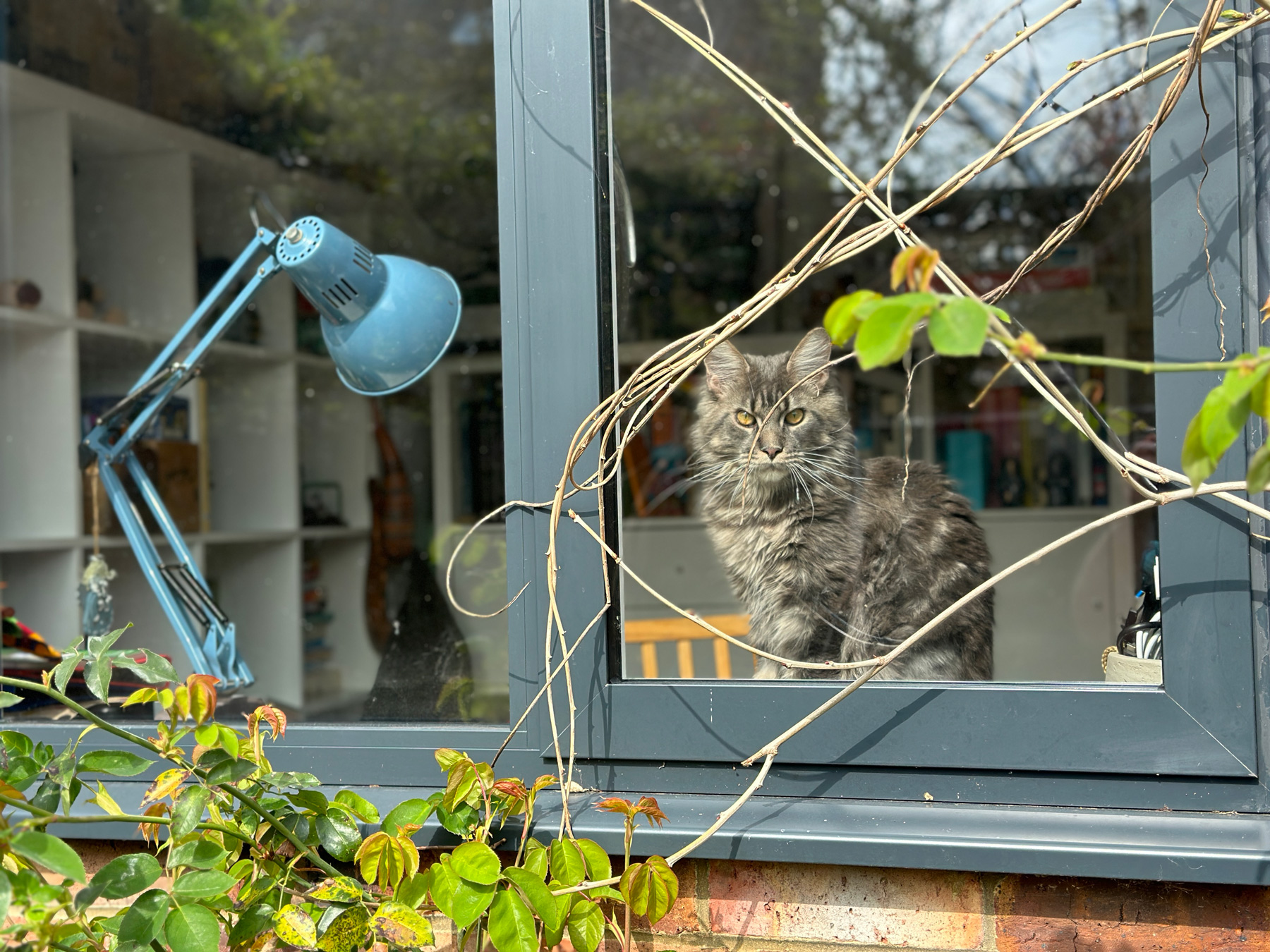
To us, a window may be part of the background of a room. To a cat, it can be a place where the entire day unfolds. Birds arrive and depart, leaves move, light travels across the floor and familiar people pass by. Even the weather changes the picture.
For an indoor cat, a window offers contact with a world they cannot physically enter. For a cat who normally goes outside, it provides an alternative on wet days, at night or whenever outdoor access is unsafe. The value is not simply the glass or the view. It is the opportunity to choose a comfortable vantage point and decide how long to stay there.
The outside world, delivered indoors
A useful window view is never entirely still. It brings movement, changing light, unfamiliar sounds and scents, and the possibility of spotting birds, insects, squirrels or neighbours. This kind of gentle variation can make the indoor environment more interesting without requiring constant entertainment from us.
Feline environmental guidance regularly recommends window perches and visual outlooks as forms of enrichment. Studies of cats living indoors also suggest that many spend several hours looking through windows when the opportunity is available. Watching is an activity in its own right, not merely what a cat does while waiting for something better.
Watching from a position of safety
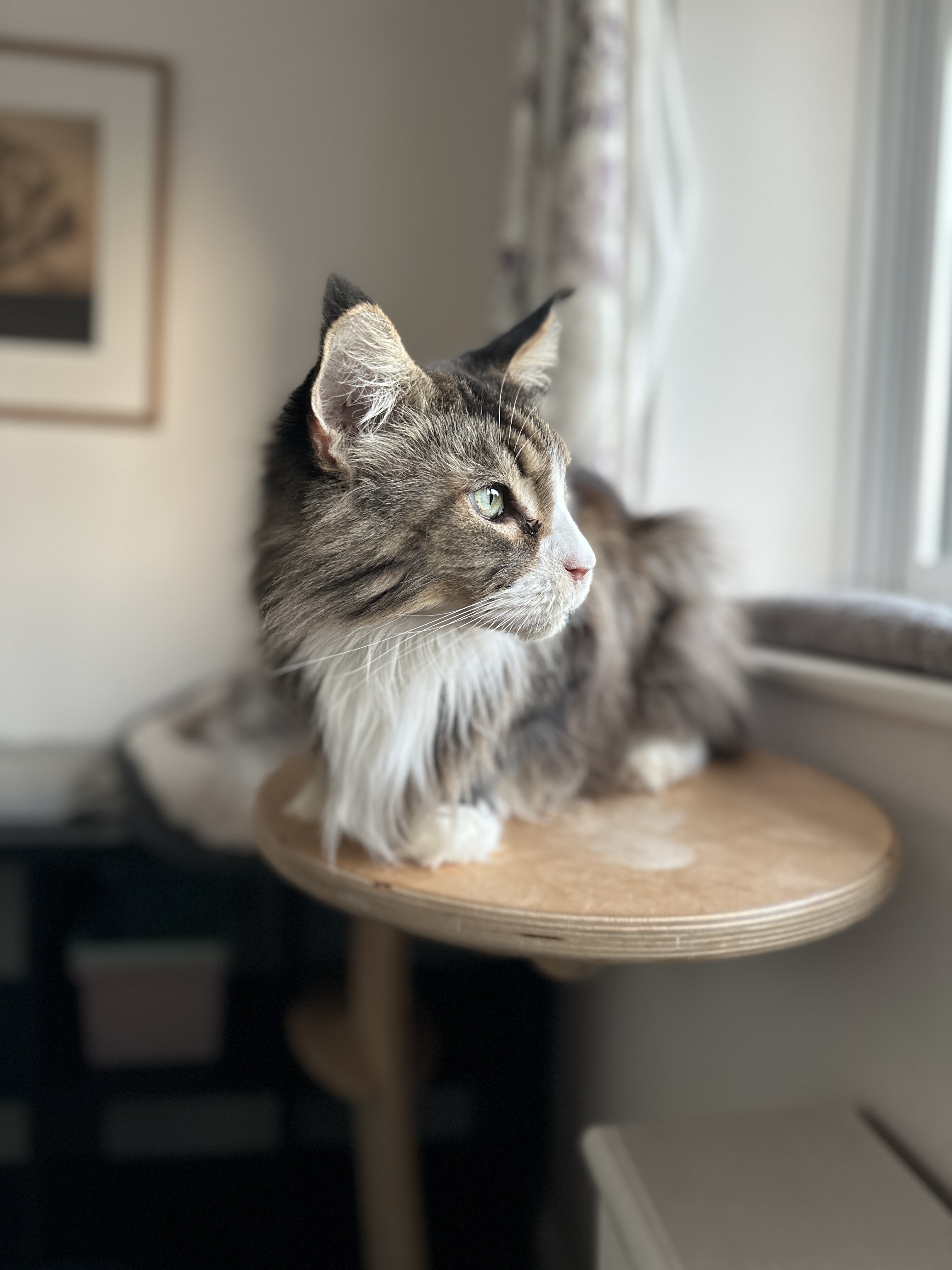
Cats often favour places that combine a good view with some height and a degree of separation from household traffic. From an elevated window position, a cat can observe both the room and the outdoors without sitting in the middle of either.
This is one reason access matters as much as the window itself. A deep sill is useful only if the cat can reach it comfortably. A sturdy chair, low shelf, bench or cat tree can create a simple route. For kittens, older cats and those with reduced mobility, intermediate steps and non-slip surfaces make the journey easier.
Keep favourite views within reach at every age
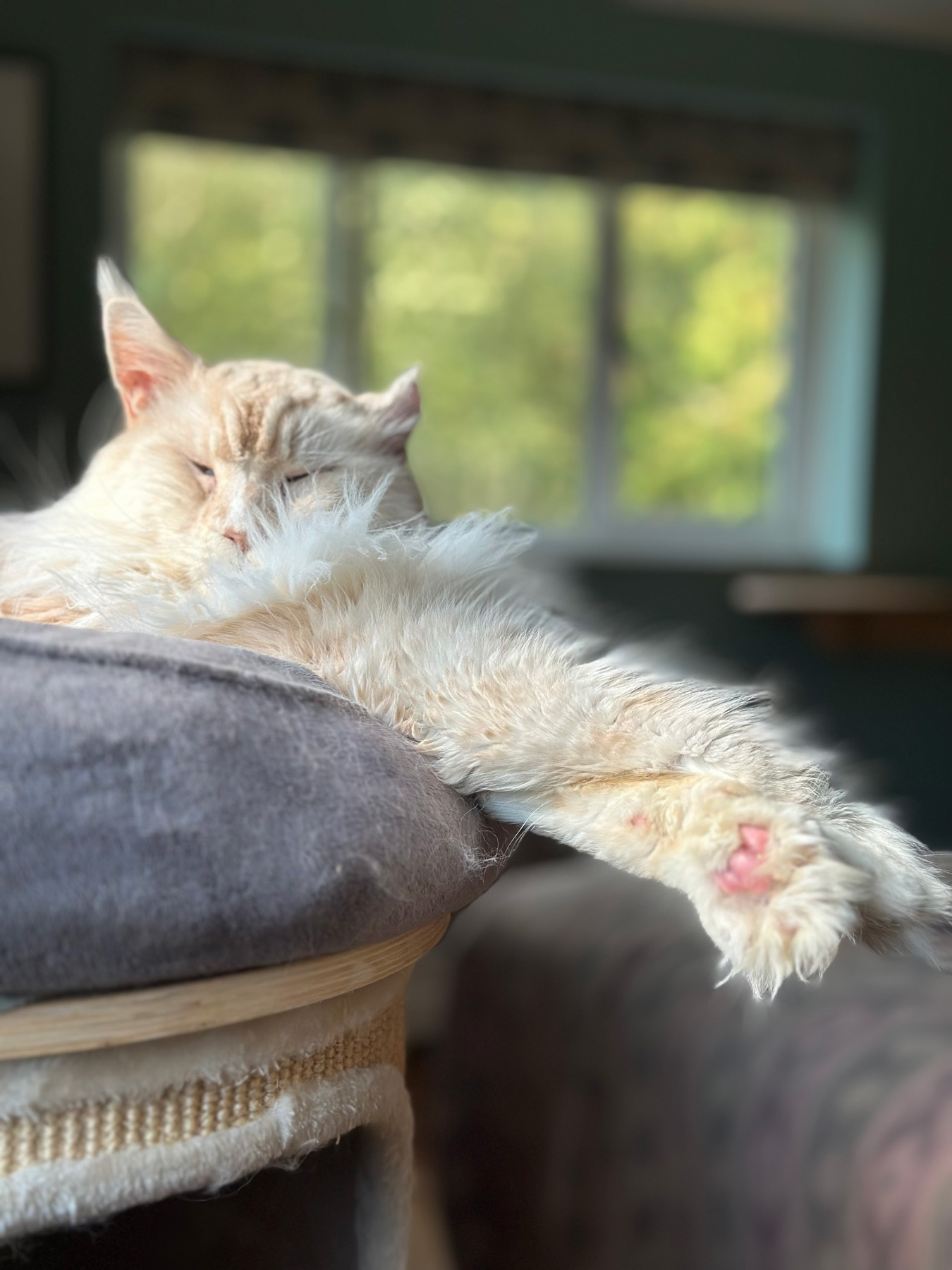
Accessibility is not only a consideration for elderly cats. Pixel is just four years old and has hip dysplasia, so I have to think carefully about the routes available to favourite window seats. The desire to watch the world does not disappear simply because a large jump is difficult or uncomfortable.
Older cats and cats with reduced mobility are often very good at adapting quietly. They may pause before jumping, pull themselves up with their front legs, use nearby furniture as an improvised step or simply stop visiting a once favourite place.
A sequence of low, stable steps can preserve access without asking for one large leap. A firm footstool, a stepped cat tree or a gently sloping ramp may work, depending on the individual cat. Keep the rises small, cover smooth surfaces with something non-slip and make each landing broad enough for the cat to balance and turn. The route down matters just as much as the route up.
It is worth making these adjustments before they are urgently needed, so the route remains familiar. A noticeable change in jumping, climbing or choice of resting place can also be a subtle sign of pain or reduced mobility rather than an inevitable part of ageing. If that pattern changes, mention it to your veterinary practice as well as adapting the room.
Make the good view comfortable
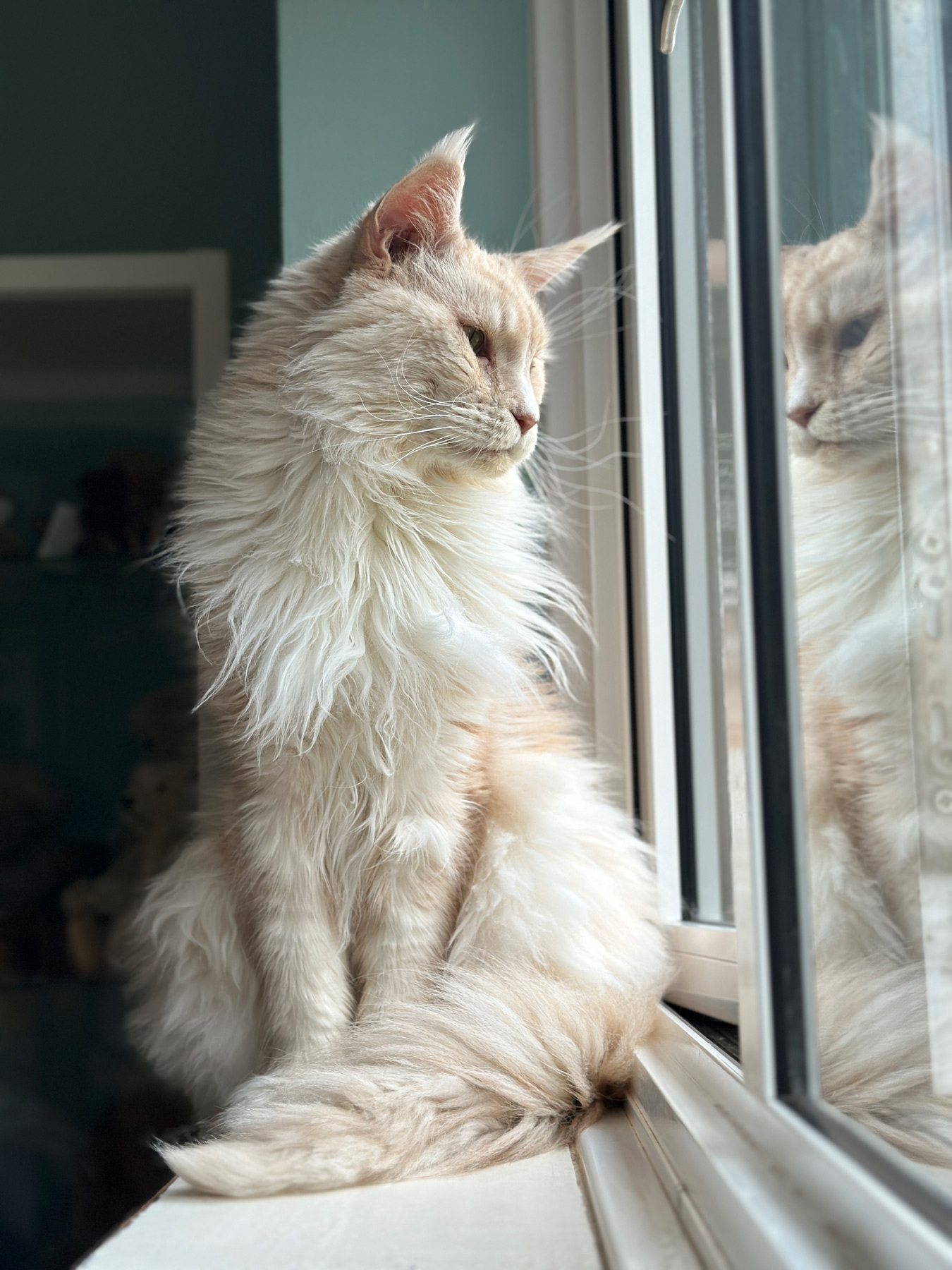
A narrow strip of sill may be enough for a determined cat, but a place designed for lingering is more useful. Check that the surface is wide and stable enough for the whole cat, with room to turn around and get down without an awkward jump. A washable folded blanket, fitted mat or shallow bed can add warmth and grip without blocking the outlook.
Notice how the light moves through the day. A sunny place may be irresistible in the morning and too warm later on. Curtains and blinds should not prevent a cat from leaving, and the cat should always have access to a cooler resting place and fresh water.
A good window seat does not hold a cat in place. It gives them another place worth choosing.
One view, more than one cat
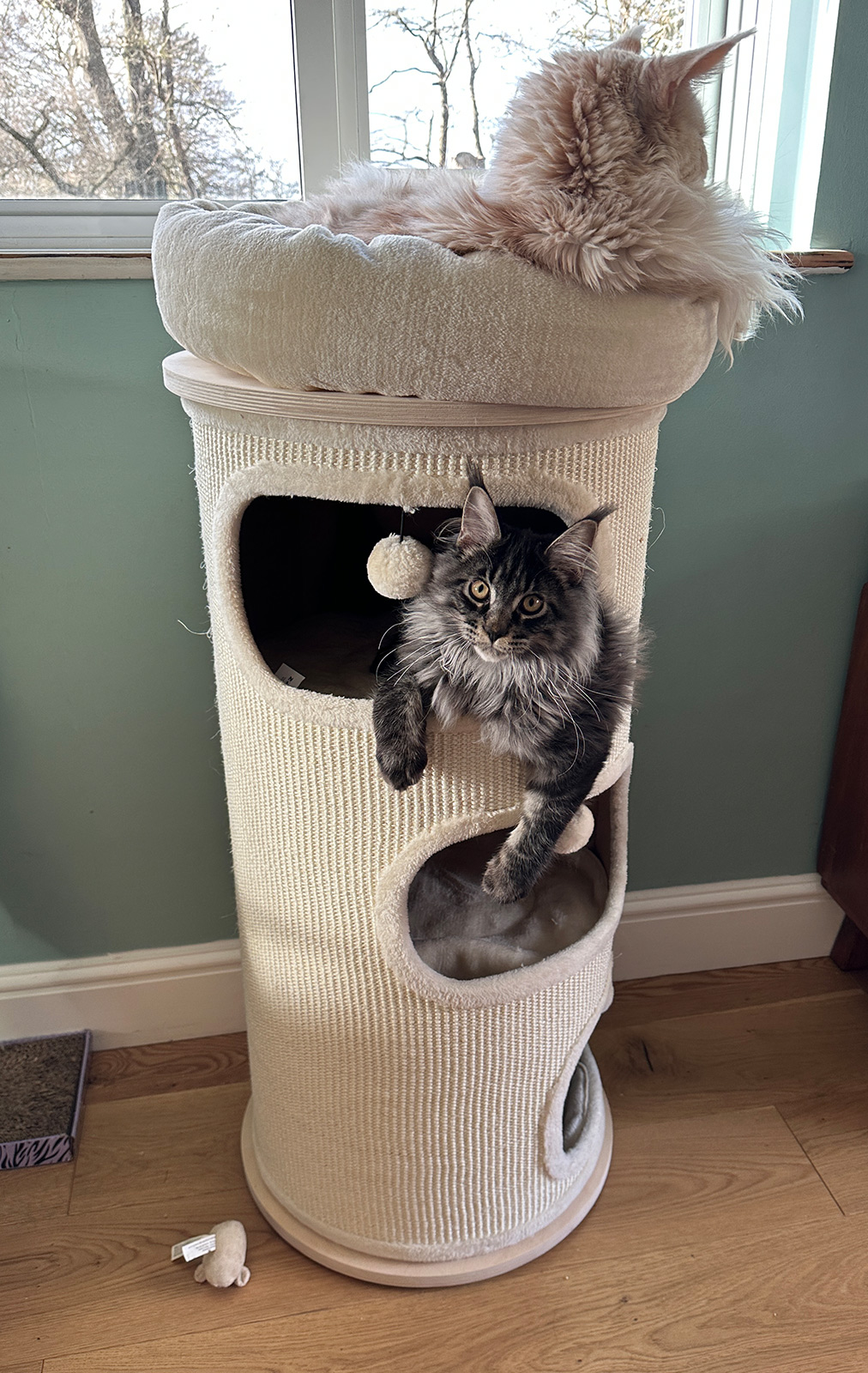
In a multi-cat household, a desirable window can become an important shared resource. A long sill may allow cats to use it together, but not every pair will want to sit side by side. More than one viewing place and more than one route up and down lets each cat choose distance as well as location.
Avoid creating a perch from which one cat can easily block another. A cat tree with several levels, a second nearby window or separate resting spots at either end of a wide ledge can reduce the need to negotiate over the best seat.
When the view is not relaxing
A window is not automatically enriching for every cat. The repeated appearance of an unfamiliar neighbourhood cat can lead to staring, pacing, spraying or conflict between cats indoors. Wildlife that can be watched but never reached may also be exciting for one cat and frustrating for another.
Watch the cat rather than assuming the view is beneficial. A loose body, ordinary blinking, resting and the ability to walk away are very different from a rigid posture, tail lashing or prolonged agitation. If a particular view causes distress, partially obscuring the lower pane or offering a calmer window elsewhere may help.
Keep the window itself safe
- Secure open windows with properly fitted, cat-safe screens or guards, ordinary insect mesh may not withstand a cat’s weight.
- Do not leave cats with access to tilted windows, where they can become trapped in the narrowing gap.
- Tie blind and curtain cords safely out of reach and keep the landing area clear.
- Make shelves, furniture and suction mounted perches stable before inviting the cat to use them.
- Keep toxic plants and breakable objects away from favourite routes and resting places.
Start with the window they already choose
There is no need to redesign the whole room. Notice which window your cat returns to, what they watch and where they try to place themselves. Then make that existing choice safer, easier to reach and more comfortable.
A window seat cannot replace play, exploration or social contact. What it can do is add another layer to the cat’s day: a place for watching, warming, dozing and remaining connected to whatever is happening beyond the glass.
Sources and further reading
- AAFP/ISFM Environmental Needs Guidelines, 2013.
- M.E. Herron and C.A.T. Buffington, “Environmental Enrichment for Indoor Cats”, 2010.
- S.L.H. Ellis, “Environmental Enrichment: Practical Strategies for Improving Feline Welfare”.
- “Owner Perceived Behavior in Cats and the Influence of Husbandry Practices, Housing and Owner Attitudes in Sweden”, 2022.
- 2021 AAFP Feline Senior Care Guidelines.