Let us begin with the truth. Shae does not have a favourite comb. Neither does her brother Pixel. They have a collection of grooming tools they dislike in subtly different ways, and one comb they appear to regard as marginally less offensive than the others.
Unfortunately for all of us, Maine Coons come with a magnificent amount of coat. It looks glorious, feels wonderful and has an extraordinary ability to form tangles precisely where a cat least wants you to investigate. Grooming is not an optional extra, even when the intended recipient has declined the invitation.
“Favourite” may be overstating it
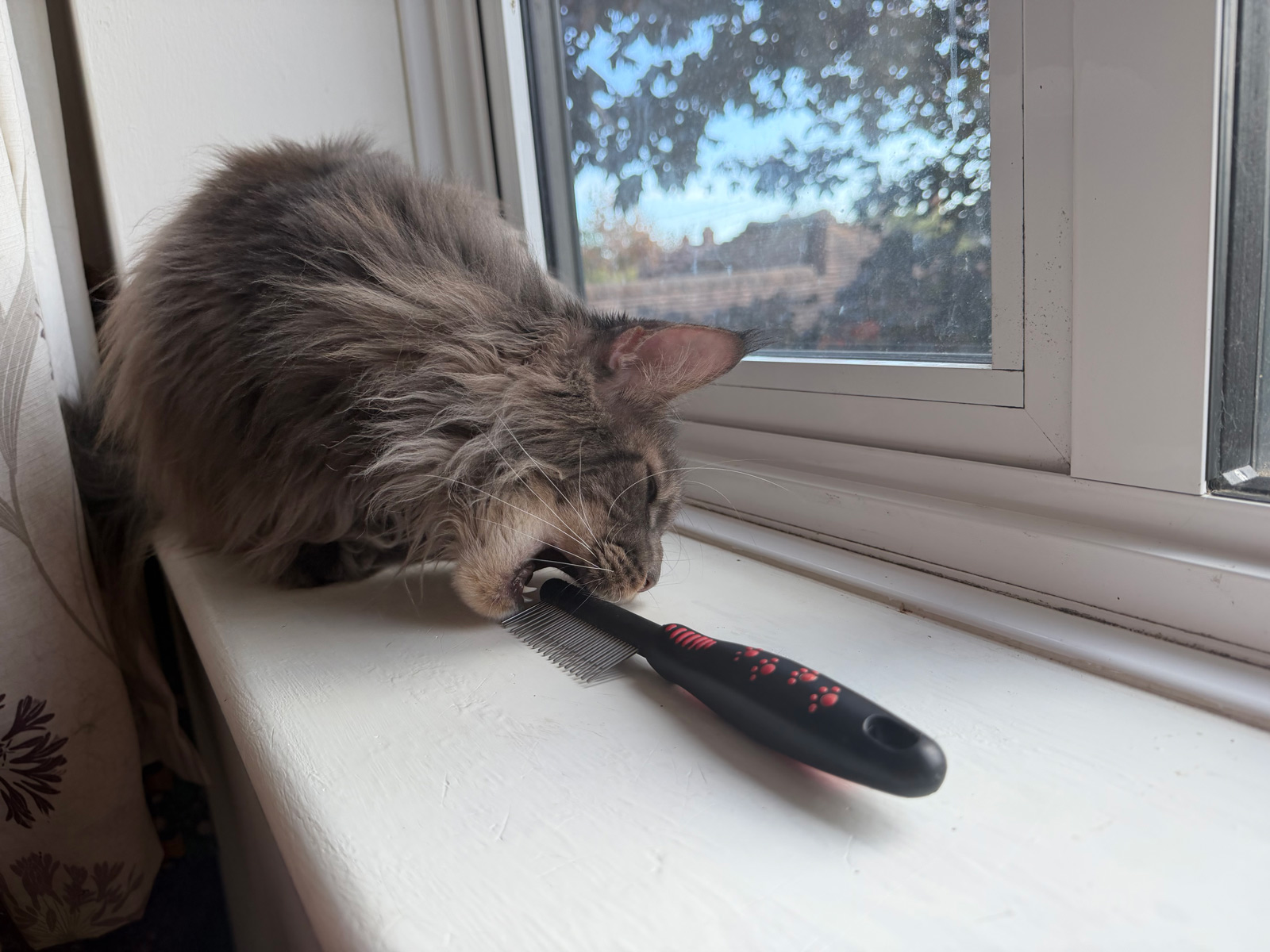
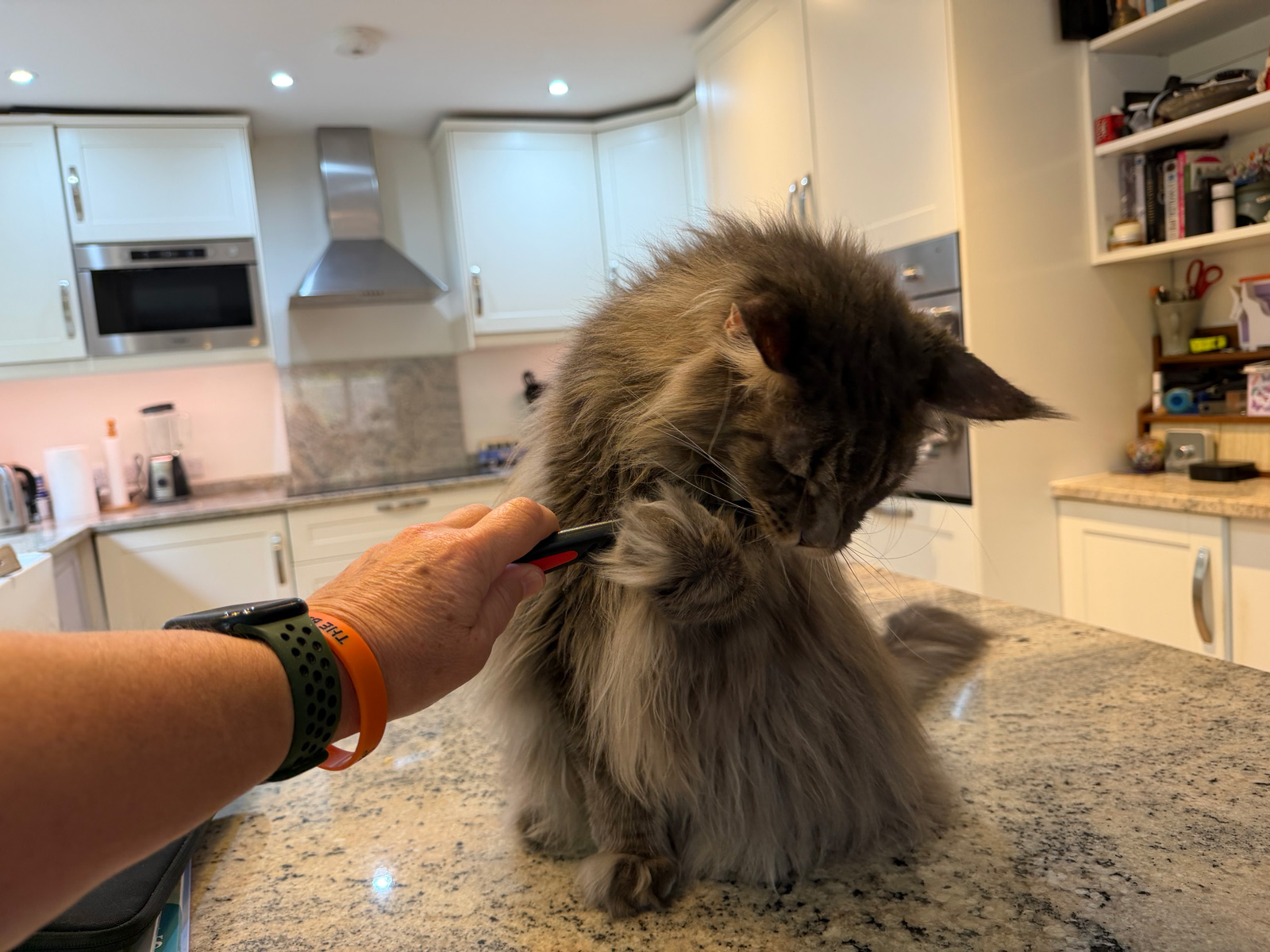
The photographs tell the story rather better than a polished product shot could. Shae is not leaning lovingly into the comb. She is biting it. This is partly protest, partly investigation and possibly an attempt to make sure it can never trouble her again.
Shae’s favourite comb is really the comb she tolerates for the longest before negotiations break down.
That may not sound like a glowing recommendation, but when grooming a reluctant long-haired cat, tolerance is genuinely valuable. A theoretically brilliant tool is useless if its appearance causes the cat to leave the room.
The comb
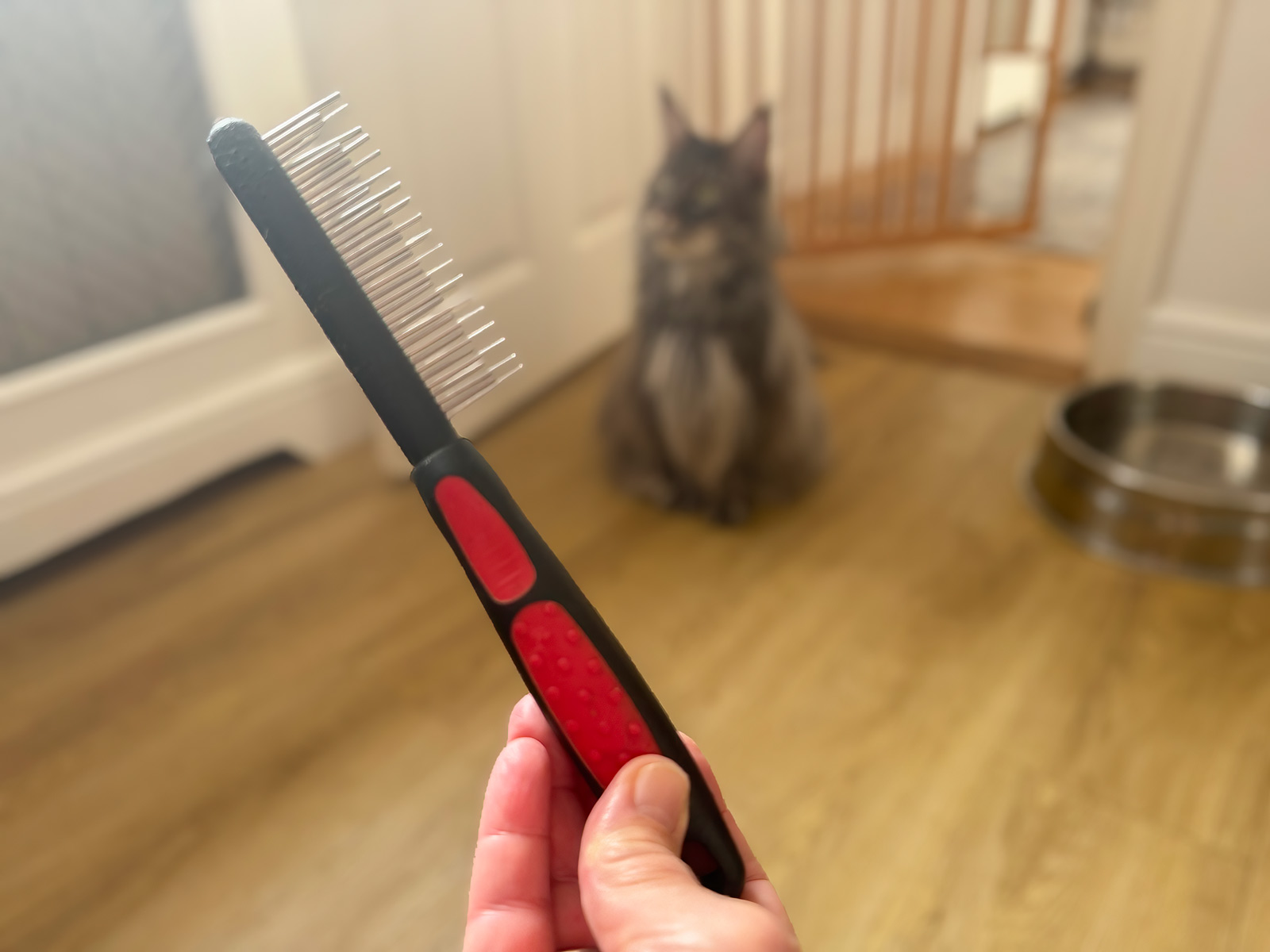
The closest documented match I have found is the Hello-Pet rotating handled comb, model 14DA4LDA. Its specifications match the comb in these photographs remarkably closely: 13 long teeth, 24 short teeth and a black and red paw-print handle. It may also have been sold under another retail brand, so I am treating that identification as likely rather than certain.
The most important detail is easy to miss in a photograph. The thick, highly rounded teeth are loose enough to swivel independently. That is why the comb rattles when shaken. As each pin meets resistance it can rotate, reducing the pull on the hair and helping the comb move through Shae’s dense coat more freely than a rigid row of fine teeth. The two lengths reach different layers of the coat, while the handle gives me enough control to work gently and stop quickly when requested.
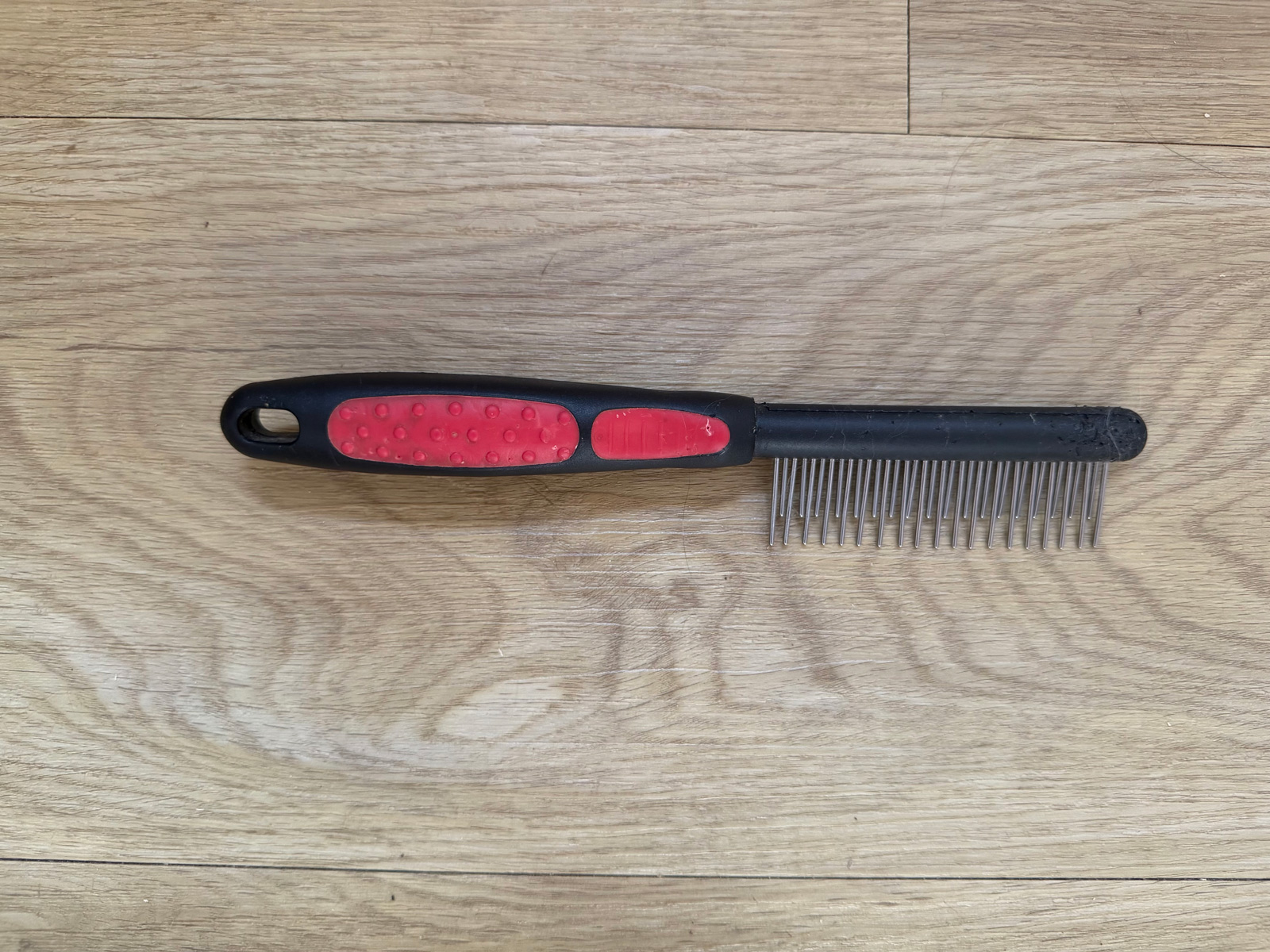
Our comb is around 15 years old and looks as though it has been through the wars. The handle is scuffed, the finish is worn and it has survived years of long-haired cats expressing their opinions about it. That wear is also evidence of how useful it has been. The open row of metal teeth is easy to clear of collected fur and simple to wash and wipe clean, so despite its battered appearance it has remained a practical part of the grooming drawer.
The Ferplast GRO 5878, now properly cat-tested
The new Ferplast GRO 5878 has now arrived and been tested on both Shae and Pixel. Most importantly, it is every bit as chewable as our older comb. This may not be one of Ferplast’s published specifications, but it is clearly an important part of the Maine Coon assessment process.
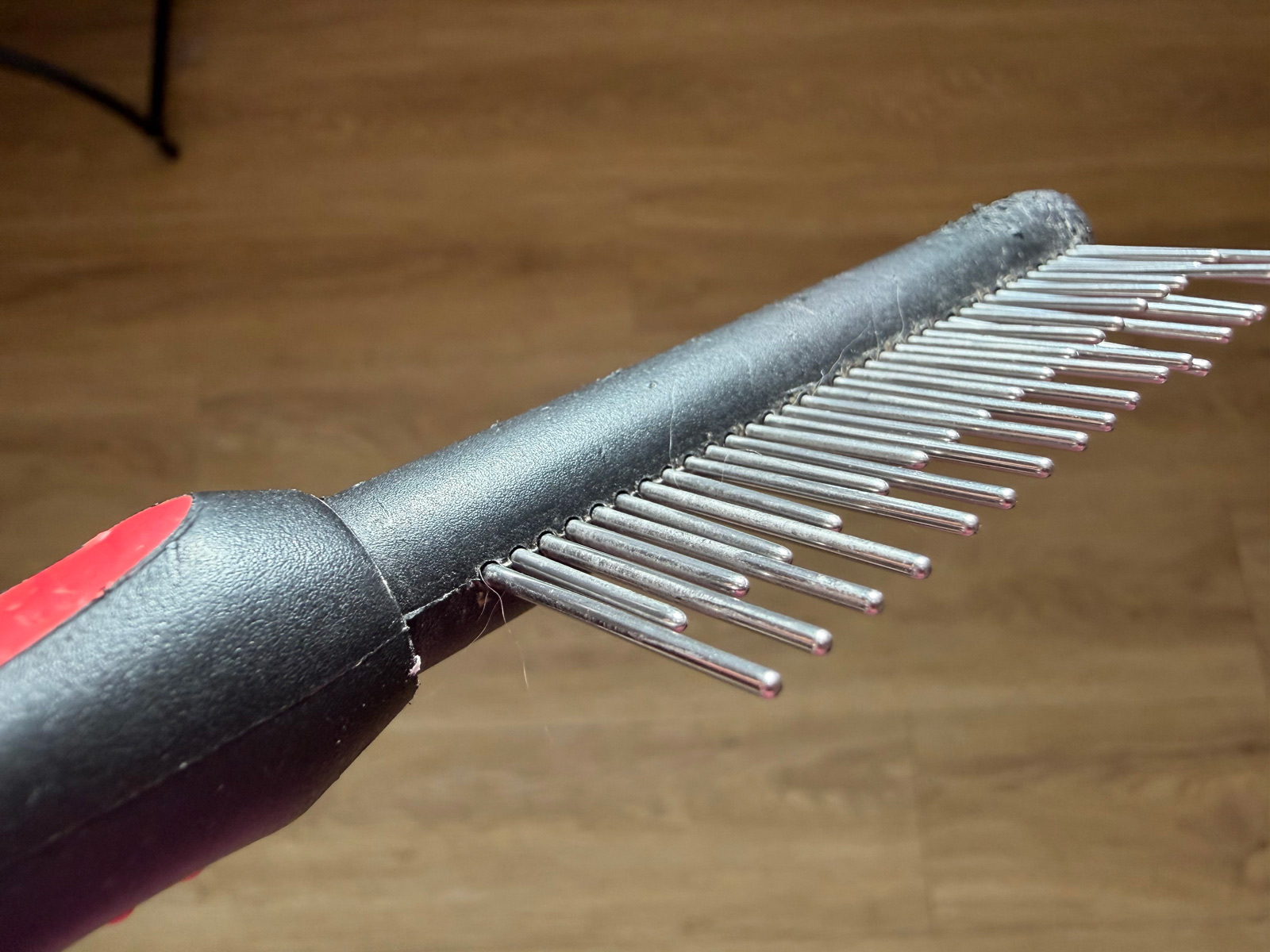
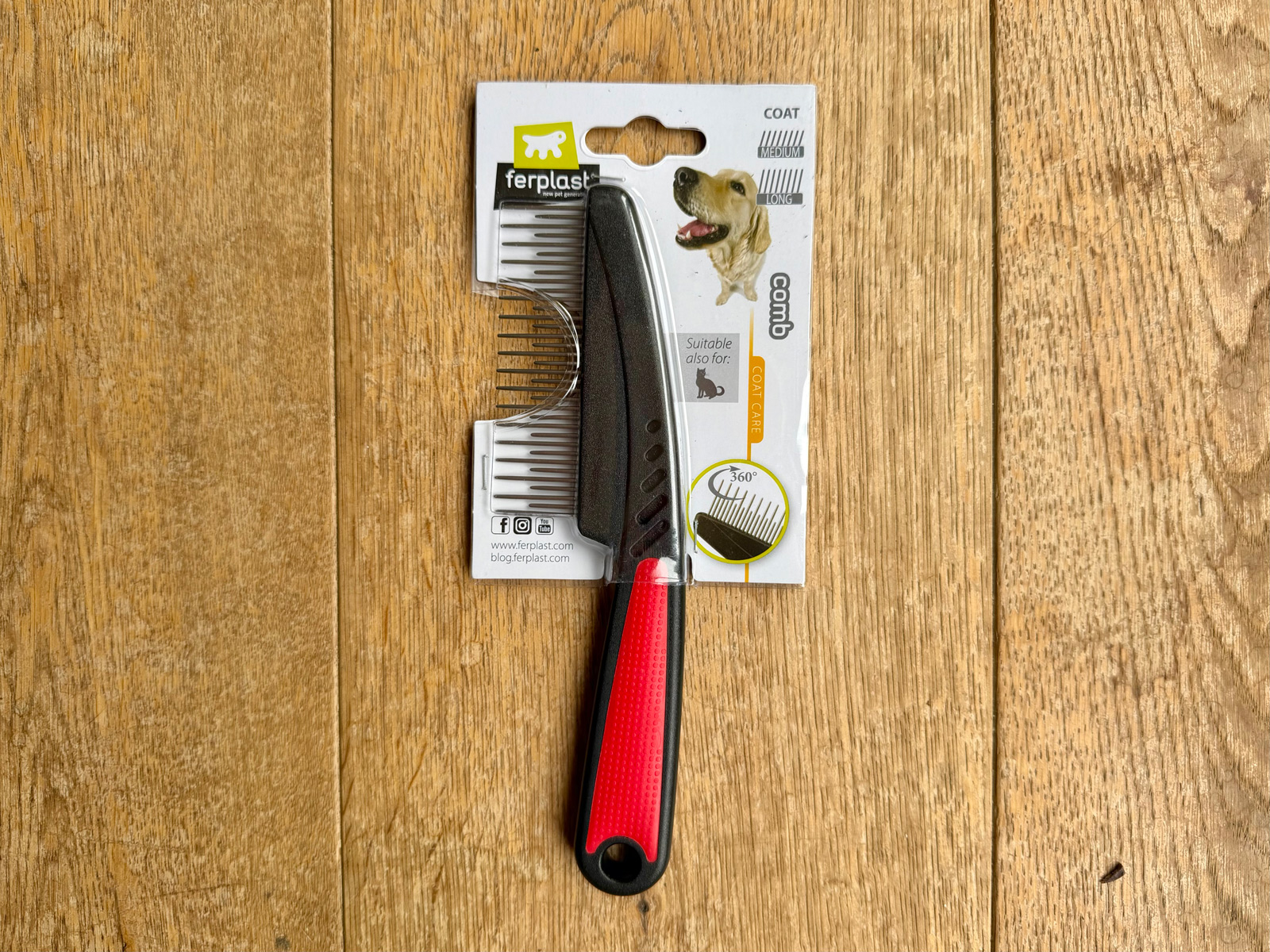
The construction is very similar to the old favourite. Its metal teeth alternate between two lengths and rotate independently as they move through the coat. The teeth on the Ferplast are a little wider and thicker than those on our older comb, with comfortably rounded ends. That makes it feel sturdy and well suited to the scale and density of a Maine Coon coat.
The packaging is mainly aimed at dogs, but it specifically says that the comb is also suitable for cats. For Maine Coons and other large, exceptionally floofy cats, I think it makes most sense as a general day-to-day comb. It moves through the accessible layers of the coat, picks up loose hair and helps prevent small tangles from developing into larger problems.
I would not use it to pull through a deep or tightly compacted mat. At that point even rotating teeth are likely to catch and tug, making an already reluctant cat even less willing to cooperate. Serious mats need a more careful approach and, when necessary, help from a professional groomer or veterinary practice.
Grooming by instalments
There is no serene half-hour grooming ritual in this house. Success is measured in small sections: a little along the back, perhaps one side of the ruff, then a pause before Shae decides that the terms of our agreement have been breached.
I try to make grooming a cooperative process rather than something Shae simply has to endure. We work in very short sessions, and calm participation is followed by something she genuinely values, usually a favourite treat and the freedom to walk away.
This is positive reinforcement, but it is also about giving her some control. I am not using food to persuade her past the point of discomfort. If she turns away, grips the comb or decides that negotiations are over, I stop. Finishing one small area while she is still coping is far more useful than forcing a longer session and making tomorrow’s grooming even harder.
Some days we accomplish more than others. A sharp turn of the head, a change in posture or a carefully planned repositioning for escape is useful information, not bad behaviour. Paying attention to those early signals helps me stop before irritation becomes a full-scale dispute.
Biting the comb is not exactly the reaction advertised on the packaging, but it gives her a moment of control. I would rather work with a cat who is allowed to say “enough” than turn an essential part of her care into a battle she expects to lose.
The rotating teeth move through a thick coat with less pulling than rigid fine teeth. The Ferplast feels sturdy, lifts a useful amount of loose fur and works well for everyday maintenance of a large, dense coat. Both Shae and Pixel tolerated a sensible amount of testing.
It does not make a grooming-averse cat enjoy being groomed, and its thicker teeth are not a shortcut through a tight mat. Deep tangles are likely to pull and still require patience, careful handling and sometimes professional help.
The human verdict
The Ferplast is not a magical comb. It has not transformed Shae or Pixel into cats who arrive at the sound of the grooming drawer opening. What it does offer is a solid, practical tool for regular maintenance. It is easy to hold, feels robust enough for a Maine Coon coat and removes enough loose fur to make short sessions worthwhile.
Its greatest strength is not that Shae loves it. She does not. Its strength is that, used gently and for short periods, it helps me care for her coat without every session becoming an ordeal for either of us.
The reluctant-cat verdict
If your cat adores grooming, you may judge a comb by efficiency, finish or the amount of fur it collects. With Shae and Pixel, the first question is simpler: can we use it without everybody falling out?
For this comb, the answer is usually yes. Briefly. With snacks. And with the understanding that the comb may occasionally need to be bitten as part of the process.
The best comb is not always the one your cat loves. Sometimes it is the one they object to least.